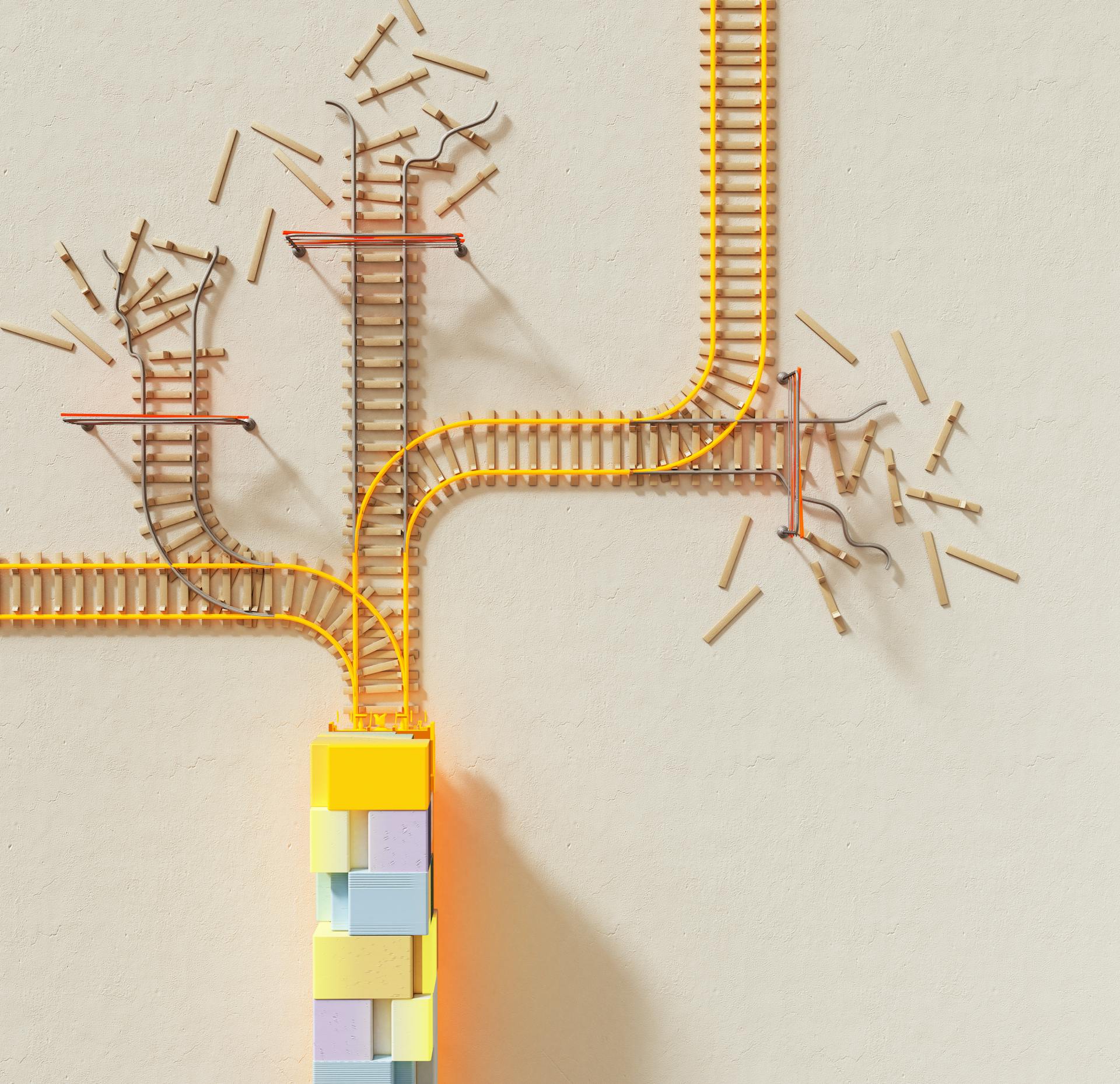

Emotional regulation, nervous system dynamics, and the ecology of feeling
Modern life pushes us toward comfort, efficiency, and emotional control. We learn to avoid discomfort, suppress sadness, and protect ourselves from emotional pain. At first glance, this seems reasonable, but psychology and neuroscience suggest something more subtle:
the emotional system works in rhythms, not isolated states. When we suppress one part of the spectrum, we often dampen the entire system.
Here we will explore why emotional avoidance can lead to emotional flatness and why cultivating
capacity rather than control may be the key to psychological resilience.
1. The Principle of Rhythm

Everything flows, out and in; everything has its tides.
The phrase Principle of Rhythm often circulates online, but it originally comes from
Hermetic philosophy.
It proposes that everything moves in cycles:
- expansion / contraction
- rise / fall
- action / rest
In Hermetic thought:
“Everything flows, out and in; everything has its tides.”
Although this is philosophical rather than scientific, it echoes an important psychological observation:
Emotions operate dynamically, not statically.
Modern psychology describes similar phenomena through concepts such as:
- emotional regulation
- affective variability
- nervous system oscillation
In other words: feeling is a system, not a switch.
Elevart Research
7 signs emotional numbing may be reducing your capacity to feel
Emotional numbing is not simply the absence of pain. It is often a protective state in which the nervous system reduces emotional intensity overall. The result is not only less distress, but also less joy, less connection, less vitality and less access to inner movement.
Difficulty identifying what you feel
One of the first signs is not dramatic sadness but emotional vagueness. You may struggle to name your inner state, feel “blank,” or notice that your reactions seem muted even in meaningful situations.
Searching for intensity
When ordinary feeling is dulled, some people look for stimulation elsewhere: compulsive habits, impulsive decisions, substance use, overwork, or relational chaos. It is often less about thrill-seeking than about trying to feel something again.
Reduced emotional resonance
You may still care deeply about others, yet feel less able to resonate with them. Emotional numbing can reduce empathy, not because compassion is gone, but because access to feeling is partially shut down.
Difficulty with closeness and intimacy
Emotional protection often affects relationships. Vulnerability may feel unsafe, exhausting, or inaccessible. This can create distance in romantic, sexual, creative, or friendship bonds.
Avoidance of emotionally charged situations
You may begin to avoid conversations, places, memories, or decisions that could activate grief, conflict, desire, disappointment, or vulnerability. The nervous system chooses safety, but the emotional world becomes narrower.
Fatigue, tension and bodily shutdown
Emotional suppression is not purely mental. It often appears in the body as chronic fatigue, headaches, muscular tension, sleep disruption, heaviness, or a low-grade sense of internal disconnection.
Emotional flatness
The most recognisable sign is a loss of texture. Life may continue, but without depth, colour, or genuine emotional amplitude. Not extreme suffering, but not aliveness either.
2. The nervous system does not selectively block emotions

Emotional suppression decreases outward expression but increases internal physiological activation.
One of the most important insights from neuroscience is that the brain does not easily suppress one emotional channel without affecting others.
Research on
emotional suppression
shows that when people chronically inhibit emotions, several things happen:
- reduced emotional intensity
- reduced emotional awareness
- reduced positive affect
- increased physiological stress
Psychologist James Gross from Stanford has extensively studied this.
Reference: Gross, J. J. (2002) – Emotion regulation: Affective, cognitive, and social consequences
Emotional suppression decreases outward expression but increases internal physiological activation.
This means the body still carries the emotion, but the person experiences
less emotional richness overall.
3. Emotional numbing: When protection becomes disconnection

The system avoids pain but also reduces access to joy.
When emotional avoidance becomes habitual, people can experience
emotional numbing.
This state is common in:
- trauma responses
- chronic stress
- burnout
- attachment injuries
Symptoms may include:
- feeling detached from one’s emotions
- lack of excitement or pleasure
- difficulty connecting with others
- sense of internal emptiness
Neuroscientific studies link this to changes in brain systems such as:
- the amygdala (emotion processing)
- the insula (interoception)
- the prefrontal cortex (regulation)
Reference: Lanius et al. (2010) – The neural correlates of trauma-related dissociation
The protective strategy becomes paradoxical:
The system avoids pain but also reduces access to joy.
4. The window of tolerance
Psychiatrist Dan Siegel introduced a helpful concept: the
Window of Tolerance.
This refers to the zone where the nervous system can experience emotions without becoming overwhelmed.
Inside the window:
- emotions are felt
- thinking remains clear
- connection is possible
Outside the window we move toward:
Hyperarousal
(anxiety, panic, anger)
or
Hypoarousal
(numbness, shutdown, dissociation)
When people suppress emotions repeatedly, the system often drifts toward
hypoarousal, where emotional intensity disappears but so does vitality.
Reference: Siegel, D. (1999) – The Developing Mind
5. Polyvagal Theory: Safety and Emotional Capacity
Neuroscientist Stephen Porges proposed another important framework:
Polyvagal Theory.
According to this theory, emotional experience depends strongly on
how safe the nervous system feels.
When the nervous system senses safety:
- curiosity increases
- creativity increases
- connection becomes easier
When the system senses danger:
- emotions narrow
- defenses increase
- avoidance appears
Emotional numbness can therefore be understood as a
protective state of the nervous system, not a personal failure.
Reference: Porges, S. (2011) – The Polyvagal Theory
6. Emotional avoidance vs Emotional capacity
The real goal of healing is not avoiding pain.

Healing therefore requires gradual re-engagement with feeling, not suppression.
It is increasing the capacity to experience emotions without becoming overwhelmed.
This process involves:
- nervous system regulation
- emotional literacy
- embodied awareness
- safe relational environments
Psychologist Peter Levine, founder of
Somatic Experiencing, explains:
Trauma is not what happens to us but what remains trapped in the nervous system.
Healing therefore requires gradual re-engagement with feeling, not suppression.
Reference: Levine, P. (1997) – Waking the Tiger
7. Creativity, emotion and the ecology of attention
Art, movement, and sensory experience play an important role in restoring emotional flow.
Creative practices help because they:
- activate embodied perception
- regulate the nervous system
- allow symbolic expression of emotions
This aligns with research on
flow states
by psychologist Mihaly Csikszentmihalyi.
Flow appears when attention, emotion, and action synchronize.
Reference: Csikszentmihalyi (1990) – Flow: The Psychology of Optimal Experience
Creative practices therefore help reopen emotional channels safely.
This is one of the foundations of art-therapy and embodied creative practices.
8. Emotional rhythm in nature
Humans evolved within environments rich in sensory rhythms:
- day / night cycles
- seasons
- movement and rest
- silence and sound
Studies on nature exposure show that spending time in natural environments improves emotional regulation.
Reference: Berman, M. G. et al. (2012) – The cognitive benefits of interacting with nature
This suggests something important:
Emotional rhythm is not only psychological — it is ecological.
Our nervous system responds to the environments we inhabit.
9. Toward a culture of emotional capacity
Modern societies often promote control, productivity, and emotional efficiency.
But human flourishing requires something else: emotional range.
The ability to feel deeply includes:
- sadness
- vulnerability
- joy
- wonder
- love
Avoiding pain may feel safe in the short term, but over time it can reduce emotional vitality.
True resilience is not numbness, it is the capacity to feel without losing ourselves.
At Elevart we explore practices that help restore this emotional rhythm through art, nature, sensory experiences, and creative attention.
>> Choose an experience that will help you reconnect with your emotional rhythm
References
- Gross, J. J. (2002) – Emotion Regulation: Affective, Cognitive, and Social Consequences
- Siegel, D. (1999) – The Developing Mind
- Porges, S. (2011) – The Polyvagal Theory
- Levine, P. (1997) – Waking the Tiger
- Csikszentmihalyi, M. (1990) – Flow: The Psychology of Optimal Experience
- Berman, M. G. et al. (2012) – The Cognitive Benefits of Interacting with Nature
- Lanius, R. et al. (2010) – The neural correlates of trauma-related dissociation